The 37 Practices of the Bodhisattvas
Gyalsé Tokmé Zangpo, and the teachings given by H.E. Jamgon Kongtrul Rinpoche
Rinpoche gave a series of teachings on the Thirty-Seven Practices of the Bodhisattvas, the concise guide to the bodhisattva path written in the 14th century by Gyalsé Tokmé Zangpo. The four sessions can be watched again below, and the root text can be downloaded in five languages.
The teachings
Download the text
The root text, with the Tibetan facing the translation. Choose your language:
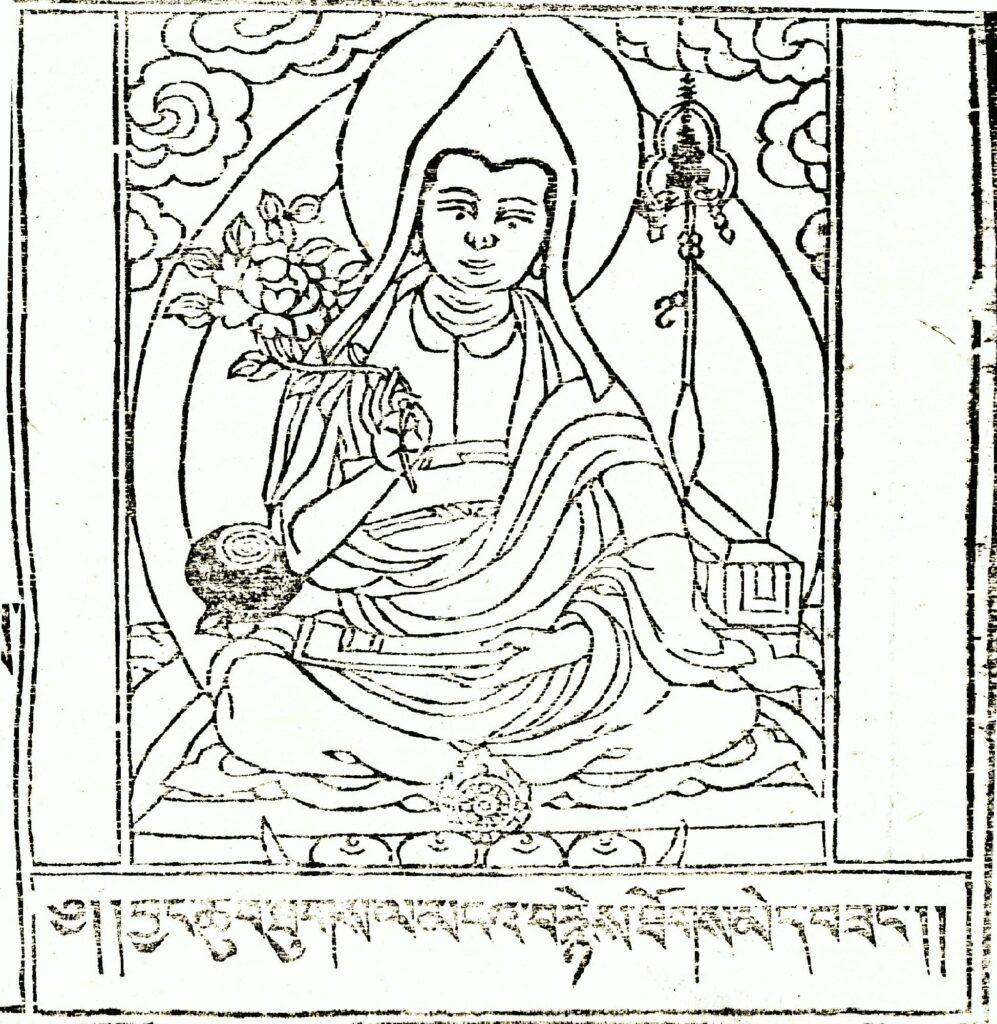
Gyalsé Tokmé Zangpo
Early years and studies
Little is known of Tokmé Zangpo's early life. He is believed to have been born in Puljung, south-west of Sakya Monastery. At fifteen he travelled to the Bodong Evamling Dharma centre, where he devoted himself to textual study under Lama Kunga Gyeltsen.
The name and the title
After being examined on Abhidharma by Jamyang Nyima Gyeltsen, his scholarly accomplishments earned him the name Tokmé Zangpo, “unobstructed goodness”. Later he received the title Gyalsé, “son of the Buddha”, that is to say bodhisattva.
Abbot, then retreatant
He served as abbot of Bodong Evamling for some nine years, from 1326 to 1335. In 1337 he moved to Ngulchu Chodzong, where he remained in retreat for over twenty years, continuing to teach Lamrim and Lojong — notably to the Sakya scholar Rendawa Zhönnu Lodrö, to whom he also taught the Bodhisattvacharyavatara. He is listed as the seventy-third in the Lamrim lineage.
His works
Tokmé Zangpo is said to have composed some hundred and fifteen works. Chief among them are a commentary on the Seven-Point Mind Training, the Ocean of Good Sayings — a commentary on the Bodhisattvacharyavatara — and his masterpiece, the Thirty-Seven Practices of the Bodhisattvas, composed in the Ngulchu Rinchen cave.
The legacy of the text
The Thirty-Seven Practices consists of thirty-seven verses giving practical instructions for a life of compassion, wisdom and altruism — generosity, ethical conduct, patience, diligence, meditation and wisdom. Studied and recited for centuries, translated into many languages, it continues to guide practitioners throughout the world.