One of the Five Great Treasures
The Kagyü Ngak Dzö: the Treasury of Kagyü Mantra
The treasury of the tantric empowerments, sadhanas and instructions of the Kagyü lineage.
The Kagyü Ngak Dzö is the collection of tantric empowerments and practices at the heart of the Kagyü lineage. It gathers the tantras that Marpa the Translator brought from India in the eleventh century, which were preserved by the Ngok family and within the Kagyü lineage. In the nineteenth century, Jamgön Kongtrul Lodrö Thayé compiled them into a single treasury so that they would never be lost.
What is the Kagyü Ngak Dzö?
“Ngak Dzö” means “Treasury of Mantra”. The Kagyü Ngak Dzö (also spelled Kagyu Ngagdzo, Kagyu Ngagdzod or Kagyü Ngakdzö) is the treasury of the tantric teachings of the Kagyü school: the empowerments, sadhanas and instructions of the great tantras received by Marpa Lotsawa (1012–1097).
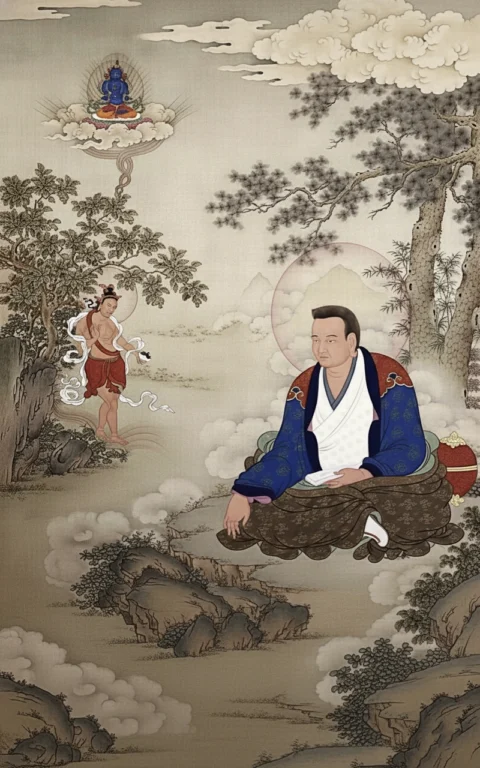
Marpa travelled to India three times and to Nepal four times, receiving teachings from many masters. It is said that thirteen of his gurus had the power to transform phenomena. Among them, the two most extraordinary masters were the great Paṇḍita Nāropa and Maitrīpa.
During his travels, he received teachings on both the Father Tantras and the Mother Tantras. When he received the empowerment of the nine-deity Hevajra from Nāropa, he realised the Path of Seeing (the first bhumi, the first stage of realisation of a bodhisattva) at that very moment.
Marpa’s Four Great Pillars
His principal disciples were known as the Four Great Pillars (Ka-chen Shi): Ngok Chöku Dorje, Tsurtön Wange Dorje, Metön Sönam Gyaltsen and Mila Shepa Dorje (Milarepa).
As Marpa instructed, Milarepa carried on the Practice Lineage (Drubgyü), while his part in the Explanatory Lineage (Shadgyü) centred mainly on the Cakrasaṃvara tradition and the Six Doctrines of Nāropa.
The Explanatory Lineage (Shadgyü) of all the tantric traditions transmitted by Marpa Lotsawa, together with their empowerments and instructions, was preserved through the lineage of Ngok Chöku Dorje.
Where it sits in the Buddhist teachings
The Mahayana teachings of the Buddha are of two kinds: sutra and tantra.
The tantras are divided into four classes: kriya, charya, yoga and anuttarayoga.
The highest of these is anuttarayoga tantra, which is divided into Father Tantras (emphasising method) and Mother Tantras (emphasising wisdom).
Why Jamgön Kongtrul compiled the Kagyü Ngak Dzö
By the nineteenth century, the tantric heritage of Marpa was in danger. Jamgön Kongtrul describes the situation frankly:
“The Glorious Marpa-Ngok Kagyü lineage has dwindled to the point where it is now no more than a thin trickle in winter, to the extent that the study and exposition, as well as the maturation and liberation through empowerments and instructions of the tantra classes are on the edge of disappearing.”
The reading transmissions of the ancient manuals had been interrupted. Practitioners had come to prefer short, simplified versions and had set aside whatever was demanding. Some still conferred empowerments “in the manner of a show”, with rituals “messed up by numerous additions and omissions, which makes the learned feel to cry and the foolish moved to laughter”. The result, he warns, is that “the life-vein of the Buddha’s Teaching is on the verge of being severed”.
His intention was therefore simple:
“Holding the Teachings of the Jetsun Lhodrakpa (Marpa) close to my heart, it is my noble intention to ensure that the perfectly pure ripening empowerments and liberating instructions contained within these precious tantras may continue uninterrupted.”
What the Kagyü Ngak Dzö contains
Jamgön Kongtrul arranges the collection in three parts, which he calls the virtuous opening, the virtuous development and the virtuous conclusion. In all, it “contains twenty-seven well-preserved empowerments and permission initiations whose lineage remains unbroken”.
The opening: blessings and long life
The first part gathers practices placed at the beginning “for the sake of auspicious connection and the great potency of their blessings”:
- White Tara, the Wish-Fulfilling Wheel – “the extraordinary personal meditational deity of the accomplished great masters of the Kagyü lineage”.
- Amitayus, “Ornament for Benefiting Beings” – the long-life empowerments received by Rechungpa in India from Machik Drubpé Gyalmo.
- Marpa’s Three Special Deities – Namgyalma (Ushnishavijaya), Jetsün Drolma (Tara) and Dorje Sempa (Vajrasattva). The first two were received from Atisha, the third from Kukuraja.
- The Small Fierce Vajrapāṇi (Candamahāroṣaṇa) according to the Rechung tradition.
- The Guru Sadhana and Guru Puja of the Drukpa Kagyü, “which opens the great gate to the blessings of the Sovereign of the Mandalas”.
Jamgön Kongtrul explains that he included them because the three long-life deities and Marpa’s permission initiations “are now rarely transmitted”, while Vajrapani and the Guru Sadhana “are indispensable necessities for everyone”.
The development: the Thirteen Tantras of Marpa
The heart of the collection is the thirteen tantra cycles of Unsurpassed Yoga Tantra, each with its empowerment, sadhana, mandala ritual and instructions for the generation and completion stages.
The Mother Tantras
- Nine-Deity Hevajra
- Nairatmya
- Hevajra Samaja (Vajrapanjara, five families)
- Chakrasamvara Samaja (peaceful Chakrasamvara–Vajrasattva)
- Five-Deity Chakrasamvara
- Five-Deity Vajravarahi
- Chakrasamvara in Six Transmutations
- Buddhakapala
- Mahamaya
- Chatuhpitha, Male aspect (Yogambara)
- Chatuhpitha, Female aspect (Jnanadakini)
The Father Tantras
- Guhyasamaja
- Manjushri Namasangiti
To these thirteen tantras from Marpa, Jamgön Kongtrul added:
- the Five-Deity Red Yamari,
- the Nine-Deity Vajrabhairava,
- the Five-Deity Small Fierce Vajrapani (Rechungpa tradition),
so as to complete the three families of the Father Tantras of the Kagyü lineage.
Within these cycles are the famous Seven Ngok Mandalas: the nine-deity Hevajra, the fifteen-deity Nairatmya, the forty-nine-deity United-Families Hevajra, the seventy-seven-deity male Chatuhpitha, the thirteen-deity female Chatuhpitha, the five-deity Mahamaya and the fifty-three-deity Manjushri Namasangiti.
The conclusion: the protectors of the lineage
The third part contains the Dharma protectors of the Kagyü tradition: the Two-Armed Mahakala of Marpa’s oral lineage; the Four-Armed Mahakala, “King of the Buddha’s Teaching Guardians”; Shri Devi Dhumavati (Düsolma), “the uncommon guardian of the Mar-Ngok Kagyü tradition”; and the Five Tashi Tseringma Sisters.
Each cycle is conferred over two days: a day of preparation, followed by the main empowerment. The complete schedule, day by day, is available as a PDF.
The transmission lineage of the Kagyü Ngak Dzö
The second half of Jamgön Kongtrul’s introduction records, lineage by lineage, every master through whom the empowerments, instructions and reading transmissions reached him. Three threads give the overall picture.
From Vajradhara to Marpa
The transmission lineage is:
Marpa’s four pillars
In his closing words, Jamgön Kongtrul sums up the role of Marpa’s main disciples:
“The transmission of the explanatory tantras (Shadgyü), which is like the continuous flow of a river, descended through the three — Ngok Chöku Dorje, Metön Sönam Gyaltsen, Tsurtön Wange Dorje. As for the Victory Banner of Practice (the Practice Lineage – Drubgyü), it was passed on by Milarepa.”
The ritual manuals of the tantras were preserved above all in the Ngok family – Ngok Chöku Dorje, Ngok Zhedang Dorje, Ngok Künga Dorje and their successors – whose writings formed the “Old Ngok Mandalas” tradition.
The Karmapas and the Karma Kamtsang
From the Ngok masters, the transmission passed to the Karmapas, and the Karma Kamtsang lineage became “the confluence of all lineage rivers”. The 3rd Karmapa, Rangjung Dorje, received tantras through several lineages at once and composed manuals that the later Karmapas, Shamarpas and Tai Situpas continued. The lineage then runs through the 4th Shamarpa, Taranatha and Karma Chagme to the Tai Situpas of Palpung, and to Pema Nyinje Wangpo, root lama of Jamgön Kongtrul.
Jamgön Kongtrul Lodrö Thayé and the Five Great Treasures
The Kagyü Ngak Dzö was compiled in its entirety by the First Jamgön Kongtrul, Lodrö Thayé (1813–1899), one of the greatest masters of nineteenth-century Tibet. By his time, many of the empowerments and instructions that Marpa had brought from India had become rare, and some lineages were on the verge of being lost. Lodrö Thayé tirelessly gathered all the material that was still available – the empowerment rituals, the reading transmissions and the instructions – and arranged it into a single, coherent treasury so that the whole could be transmitted from one master to the next.
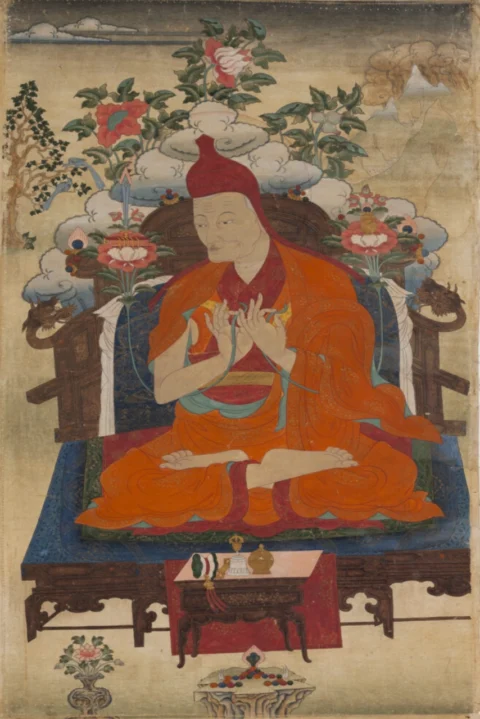
Born in 1813 in eastern Tibet, he studied with some fifty teachers, principally Situ Pema Nyinje Wangpo, and received the sutras, tantras and essential instructions of every tradition. Known in full as Jamgön Kongtrul Karma Ngawang Yönten Gyatso Lodrö Thayé, he became the master of the Five Great Treasures (Dzö Chen Nga), the vast collections in which he preserved the teachings of all the lineages of Tibet. Together with Jamyang Khyentse Wangpo, he founded the Rimé (non-sectarian) movement.
The Kagyü Ngak Dzö is one of these Five Great Treasures, and the one devoted specifically to the tantric heritage of the Kagyü lineage. Lodrö Thayé was the principal teacher of the 14th and 15th Gyalwang Karmapas, and the transmission of the Kagyü Ngak Dzö has passed down through the Karmapas and the Jamgön Kongtrul incarnations ever since. He passed away in 1899, at the age of 85, leaving a legacy that shines, in the words of his biographers, like the sun.
The Jamgön Kongtrul lineage
Since Lodrö Thayé, the Jamgön Kongtrul incarnations have held and transmitted the Kagyü Ngak Dzö in an unbroken line.
In keeping with the wish expressed in the past by Lama Ole and Hannah, Jamgön Kongtrul Rinpoche has been requested to bestow the Kagyü Ngak Dzö. In 2027, at Karma Guen in Spain, Rinpoche will bestow the complete transmission for the first time in his life.
The Kagyü Ngak Dzö lineage
The First Jamgön Kongtrul, Lodrö Thayé, compiled the Kagyü Ngak Dzö and transmitted it to the 11th Tai Situpa, Pema Wangchok Gyalpo. From him, the transmission passed to the 16th Gyalwa Karmapa in Tibet. The 2nd Beru Khyentse Rinpoche received the complete transmission from the 16th Karmapa and later conferred it on the 4th Jamgön Kongtrul Rinpoche.
How is the Kagyü Ngak Dzö transmitted?
Jamgön Kongtrul distinguishes three streams that belong together: the ripening empowerments (wang), the liberating instructions (tri) and the supporting reading transmissions (lung). He arranges the collection “so that the ripening empowerments and the liberating instructions may never be separated”.
He points out the difference between a permission empowerment, for which one may use whatever is most convenient, and “a great tantra transmission such as this”, received “from a single lama once in a lifetime” in order to “achieve the ultimate goal of one’s life”.
What is transmitted
Traditionally, three things are transmitted together:
1. Ripening empowerment (wang)
The following three points show the essential role of empowerment in the tantras:
The Ground: Every living being already has buddha nature. This is a natural, self-aware, awakened potential, sometimes called sugatagarbha. It is the foundation that makes enlightenment possible for everyone.
The Path: In the empowerment ceremony, this inner potential is awakened and made ready to grow. The empowerment brings blessings and creates the right conditions to practise the path of mantra (the tantric path). It plants a seed that will one day blossom into enlightenment.
“Before an empowerment, the mind is said to be unripened; by bringing to mind the image of the deity and receiving the substances through the ritual, the mind is matured so that one is able to practise that yidam in an authentic way.”
Anuttarayoga tantra empowerments have four parts, known as the Four Empowerments of Vajrayana Buddhism. Each one is connected with body, speech, mind, or the recognition of the nature of mind. Together, they establish the basis for progressing along the tantric path towards enlightenment.
The Fruit: When the path is fully completed, this buddha nature is completely revealed. All its awakened qualities come to full maturity, and one reaches the highest state: becoming a Vajra Buddha, a fully enlightened being.
2. Reading transmission (lung)
By hearing the text read aloud, one receives the complete power and blessing of that practice.
3. Instruction (tri)
Guidance on how to do the practice, so that one does not leave with the empowerment alone.
The commitments
Generally, the Kagyü Ngak Dzö is a series of tantric empowerments, and the samaya concerns those who engage in the practice of the yidams.
At the end of an empowerment, the commitments known as samaya (དམ་ཚིག་) are traditionally proclaimed. These commitments are essential for maintaining the sacred connection with the Vajrayana teachings and for engaging in tantric practice correctly. Their purpose is to dedicate our body, speech and mind to the Dharma and to integrate practice into our daily lives.
Keeping samaya does not necessarily mean performing every sadhana separately or reciting a set number of mantras for each deity every day. Rather, it means focusing sincerely and wholeheartedly on the practice one has undertaken, and cultivating it properly.
All Buddhas and yidam deities are inseparable in the nature of wisdom. Therefore, by accomplishing the practice of one deity, one can accomplish the wisdom of all Buddhas. What matters most is not the number of practices performed, but the sincerity, consistency and depth with which we practise.
According to one’s circumstances and capacity, one should make every effort to devote time to practice. In this way, by keeping one’s commitments and practising to the best of one’s ability, one preserves samaya and gradually deepens one’s realisation of the Dharma.
Why does this transmission matter?
The Kagyü Ngak Dzö is the living heart of the Kagyü lineage: the yidam practices on which the whole path of the Kagyü tradition rests. Without this transmission, the sadhanas of Chakrasamvara, Hevajra, Vajravarahi and the other deities cannot be practised authentically, and the lineage of blessing that runs from Vajradhara through Tilopa, Nāropa, Marpa and Milarepa cannot be passed on.
Because the complete collection takes more than a month to confer, it is given only rarely. Receiving it in full from the holder of the lineage plants in each participant the seeds of the entire tantric path of the Kagyü, and preserves for future generations in Europe the transmission that Lodrö Thayé worked so hard to save.
How your support will be used
Conferring the complete Kagyü Ngak Dzö is an undertaking of more than a month, prepared with the care that such a rare transmission deserves. Your offering will help cover:
Any amount remaining after the transmission will be offered entirely to Jamgön Kongtrul Rinpoche.
Please note: an offering is entirely voluntary and separate from registration. It does not register you for the transmission, and registration does not require any offering. To attend, please register directly with Karma Guen: programme and registration.
Support this exceptional transmission
Every offering, whatever its size, helps make it possible for the complete Kagyü Ngak Dzö to be transmitted in Europe and preserved for future generations. An offering does not register you for the transmission.
Frequently asked questions
What does “Kagyü Ngak Dzö” mean?
It means “Treasury of Kagyü Mantra”. It is one of the Five Great Treasures of Jamgön Kongtrul Lodrö Thayé and gathers the tantric empowerments, sadhanas and instructions that Marpa the Translator brought from India in the eleventh century.
Who compiled the Kagyü Ngak Dzö?
The First Jamgön Kongtrul, Lodrö Thayé (1813–1899), one of the founders of the Rimé movement. He gathered every empowerment ritual, reading transmission and instruction still available and arranged them into a single treasury.
Why was it compiled?
In his own words, the Marpa-Ngok lineage had dwindled to “a thin trickle in winter”, and its empowerments and instructions were “on the edge of disappearing”. He compiled the treasury so that they would continue uninterrupted.
What does the Kagyü Ngak Dzö contain?
It has three parts. The opening contains blessing and long-life practices such as White Tara, Amitayus and Marpa’s Three Special Deities. The development contains the Thirteen Tantras of Marpa. The conclusion contains the Dharma protectors of the lineage, such as Mahakala and Shri Devi. In all, it holds “twenty-seven well-preserved empowerments and permission initiations whose lineage remains unbroken”.
What are the Thirteen Tantras of Marpa?
They are the cycles of Unsurpassed Yoga Tantra at the heart of the collection. Eleven are Mother Tantras: Nine-Deity Hevajra, Nairatmya, Hevajra Samaja, Chakrasamvara Samaja, Five-Deity Chakrasamvara, Five-Deity Vajravarahi, Chakrasamvara in Six Transmutations, Buddhakapala, Mahamaya, and the Father and Mother cycles of Chatuhpitha. Two are Father Tantras: Guhyasamaja and Manjushri Namasangiti. Jamgön Kongtrul added Vajrapani, Red Yamari and Vajrabhairava to complete the three families of the Father Tantras.
What are the Seven Ngok Mandalas?
They are seven mandalas preserved by the Ngok family: the nine-deity Hevajra, the fifteen-deity Nairatmya, the forty-nine-deity United-Families Hevajra, the seventy-seven-deity male Chatuhpitha, the thirteen-deity female Chatuhpitha, the five-deity Mahamaya and the fifty-three-deity Manjushri Namasangiti.
How is the Kagyü Ngak Dzö transmitted?
Three things are transmitted together: the ripening empowerment (wang), the reading transmission (lung) and the instruction (tri). Each cycle is conferred over two days. The first is a preparation day, with refuge, bodhicitta, the examination of dreams and the protection cord. The main empowerment is given on the second day. The transmission opens with Hevajra.
What commitments does receiving it involve?
Generally, the Kagyü Ngak Dzö is a series of tantric empowerments, and the samaya concerns those who engage in the practice of the yidams. Keeping samaya does not necessarily mean performing every sadhana separately or reciting a set number of mantras for each deity every day. Rather, it means maintaining the highest view and a pure connection with the teacher, and focusing sincerely and wholeheartedly on the practice one has undertaken and cultivating it properly.
How should one prepare?
The best preparation is the accumulation of merit and purification practice (for example, Vajrasattva). These two accumulations help one to receive the blessing of these tantras and to keep the connection with this transmission and the lineage in all future lives.
Who transmits the Kagyü Ngak Dzö today?
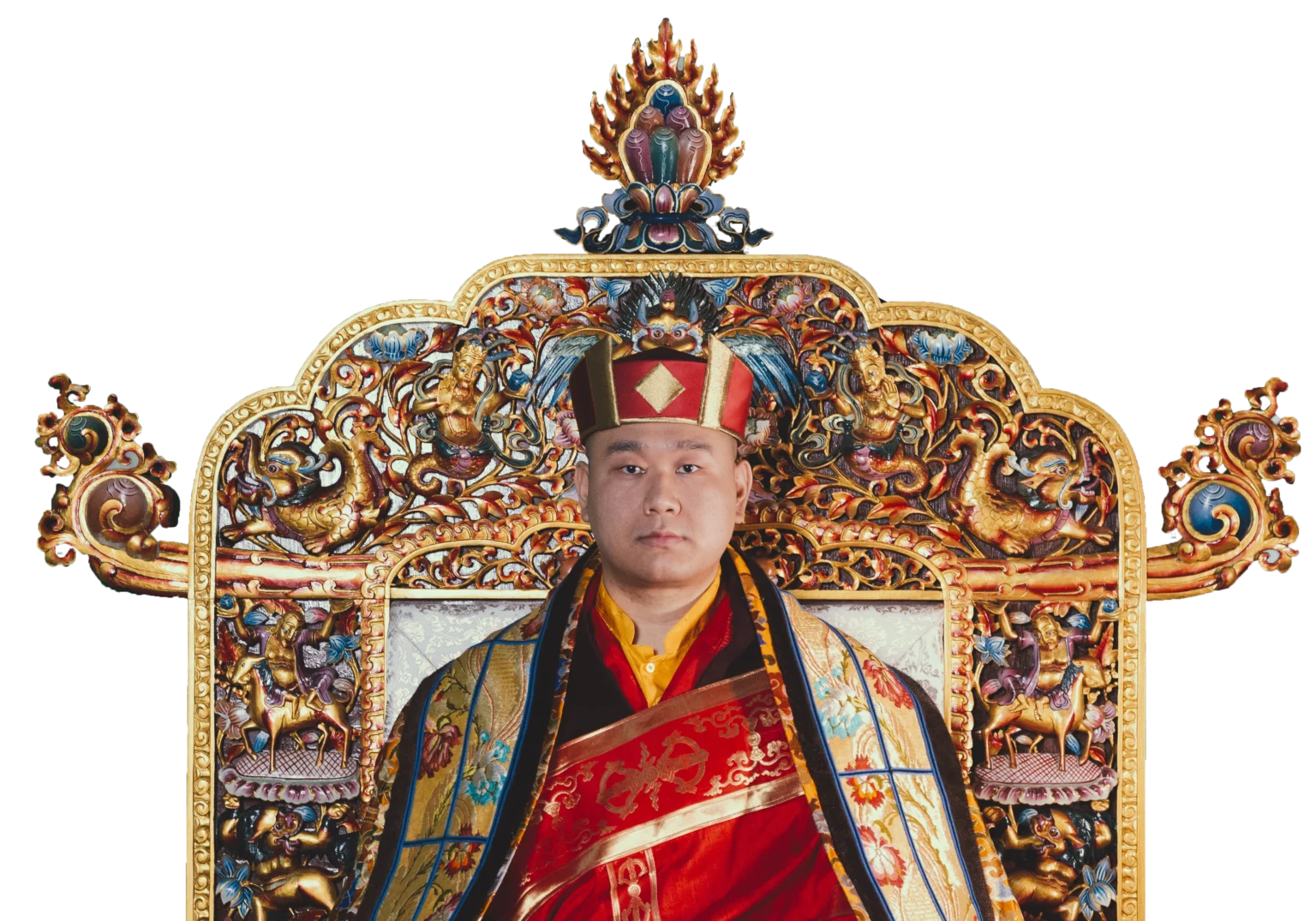
It has been held in an unbroken line by the Karmapas and the Jamgön Kongtrul incarnations. The 4th Jamgön Kongtrul, Mingyur Drakpa Senge, received it from Beru Khyentse Rinpoche.
Why is it given so rarely?
Because conferring the complete collection takes more than a month.
When will the Kagyü Ngak Dzö transmission take place?
From 15 September to 25 October 2027, His Eminence the 4th Jamgön Kongtrul Rinpoche will confer the complete Kagyü Ngak Dzö at Karma Guen, Spain.
How can I support the transmission?
You can make an offering to help cover the costs of this exceptional transmission: Rinpoche and the lamas, all the preparations of the transmission, and its recording and preservation for the lineage and for future generations. See how your support will be used or make an offering. An offering is voluntary and separate from registration.
How do I register for the transmission?
Registration is handled by Karma Guen and is independent of any offering. You can find the full programme and register on the Karma Guen website.
Every day of the transmission, from the welcoming ceremony to the final long-life ceremony, with the preparation days and the main empowerments.
Receive the transmission
From 15 September to 25 October 2027, His Eminence the 4th Jamgön Kongtrul Rinpoche will confer the complete Kagyü Ngak Dzö at Karma Guen, Spain.
Registration is made with Karma Guen. Offerings to support the transmission are separate and voluntary.
Source
All quotations on this page are taken from Jamgön Kongtrul Lodrö Thayé’s introduction to the Kagyü Ngak Dzö, The Precious Moonbeams Dispelling the Darkness of Doubt (Kagyü Ngak Dzö Lengzhi).
Online version: jamgon-kongtrul.org/kagyu-ngak-dzo